Designing a B2B Paid Media Architecture Where Agentic Feedback Loops Replace Quarterly Resets
Continuous learning from CRM outcomes replaces quarterly pauses in B2B paid media.
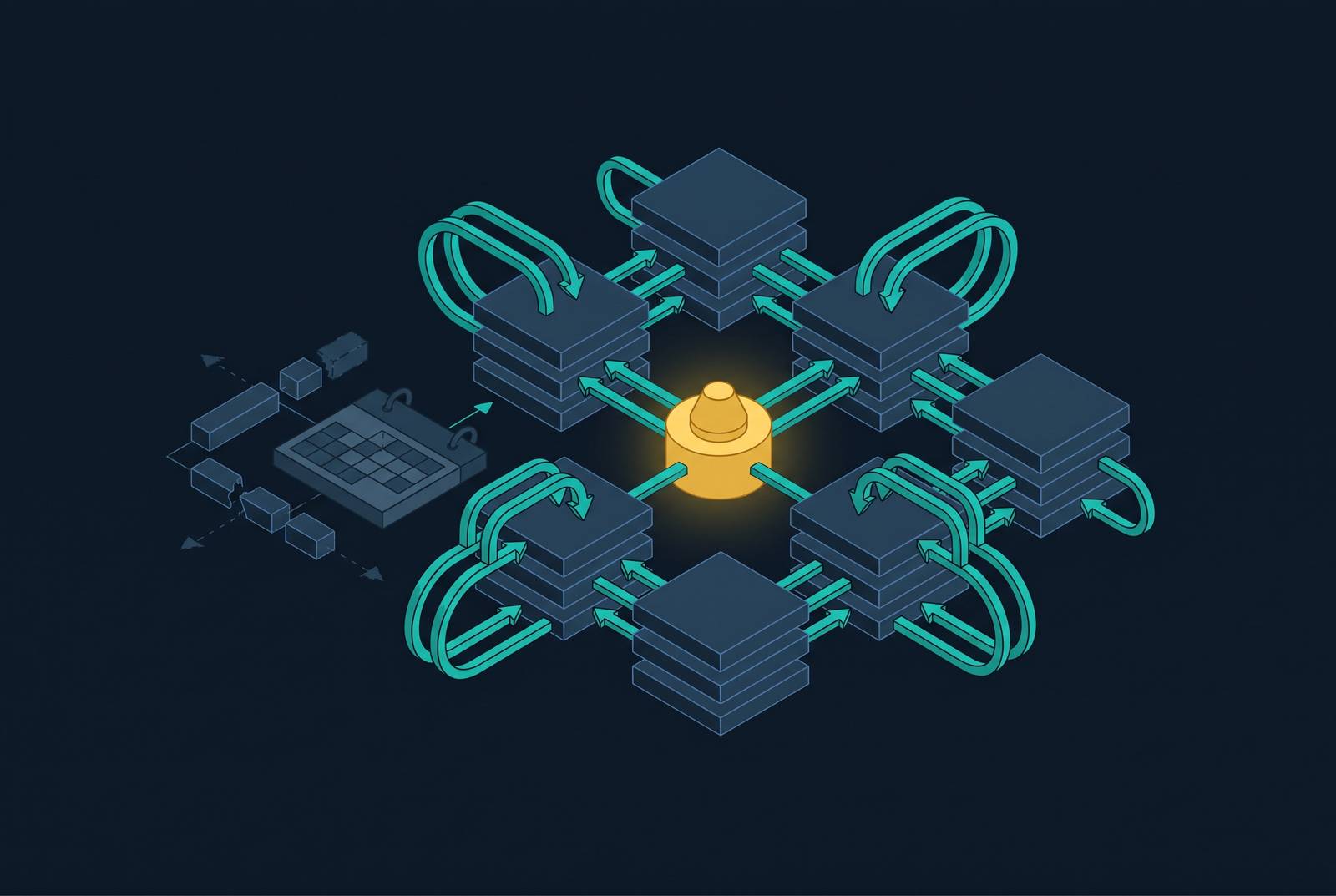
Compounding campaign intelligence for B2B growth marketing means building a paid media system where CRM outcomes, creative evidence, and bid history inform every new decision. Agentic feedback loops replace quarterly resets by joining planning, execution, and learning in one continuous system. The structural change is not faster ad production, but an architecture that preserves evidence while keeping consequential decisions under human control.
Why the quarterly-reset model is structurally mismatched to B2B paid media
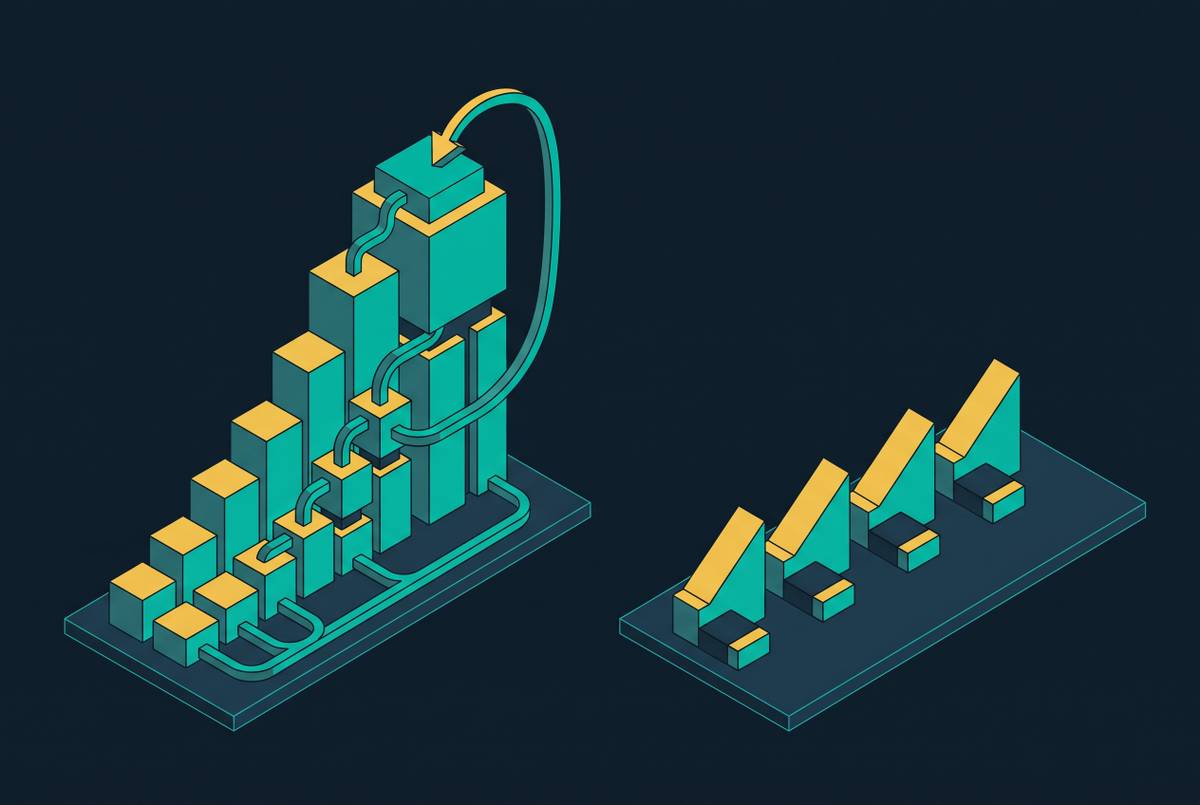
A program runs well in Q1, pauses for planning in Q2, and relaunches without the bid history and audience warmth it had built. The team has a new brief and an old problem. By treating the campaign as an event, it has interrupted the learning that made the program work. Audience learning, creative signal, and bid optimization must recover before the next campaign can build on the last one.
The calendar is not the buyer’s operating system. Buying committees change their behavior, competitors act, and platform delivery logic shifts faster than a 90-day cycle can observe and answer. Yet the quarterly model assumes those changes can wait for a post-mortem, a budget meeting, and another launch. It survives because it fits agency billing, finance approvals, and board reporting. The failure begins when an administrative boundary becomes a learning boundary.
What makes paid advertising unusually well-suited to agentic systems — and where that breaks down for B2B
An agent can act, observe a result, and adjust within hours, while many decisions are scoped and reversible. That is different from following a fixed script. A rule-based system executes a prescribed response, while a generative tool produces something when prompted. An agent pursues an objective and adapts its actions based on what happens.
But which result is it actually observing? The default feedback loop closes inside the ad platform, while a B2B deal may close months later in a CRM the agent cannot read. Clicks, page views, and form fills give quick feedback, but their link to revenue is weak and noisy. The agent can therefore become impressively efficient at attracting people who never buy. Speed does not repair a faulty compass.
The architecture needs to change beyond what the settings panel can do. CRM stage changes must reach the bid stack as event triggers, so an account becoming an opportunity can prompt a spend increase, a slipping opportunity can trigger recapture, and a competitor win can move the account into long-cycle nurture. Those actions remain subject to the program’s budget authority. The governing principle is simple enough to be uncomfortable. Agents amplify the foundation beneath them, so clean tracking supports improvement while broken tracking accelerates waste.
How to assign channel roles before any agent touches the budget
Channel roles define what an agent is allowed to call success. Before optimization begins, each channel needs a job, either capturing existing intent or creating awareness among the ideal customer profile, or ICP, before a buying cycle starts. Mixing those jobs in one campaign or budget pool confuses the objective. A system asked to get as many immediate responses as it can has little reason to protect work that pays off later. It cannot optimize for a distinction the architecture never made.
For sales-led B2B, that distinction depends on annual contract value, or ACV, and how many people are on the buying committee. As ACV rises, LinkedIn’s weight increases because reaching a 6–12 person buying committee requires firmographic precision that keyword targeting cannot deliver. Search intent is useful, but it is not a committee map. At the enterprise tier, putting most spend into Google while under-allocating to LinkedIn can therefore be a role-assignment error. Better bids cannot make up for reaching too little of the buying group.
The budget follows three layers of work. Demand capture uses Google Search for high-intent queries, including competitor names, product category terms, and solution-specific searches. Demand education reaches ICP-fit prospects who are not yet actively searching. Demand creation uses thought leadership aimed at senior decision-makers to build brand preference and make later capture more effective. Education and creation build future demand, so judging them only by immediate capture would lose sight of why they were funded.
The data substrate the agent reasons over — and why it must be built before the agent runs
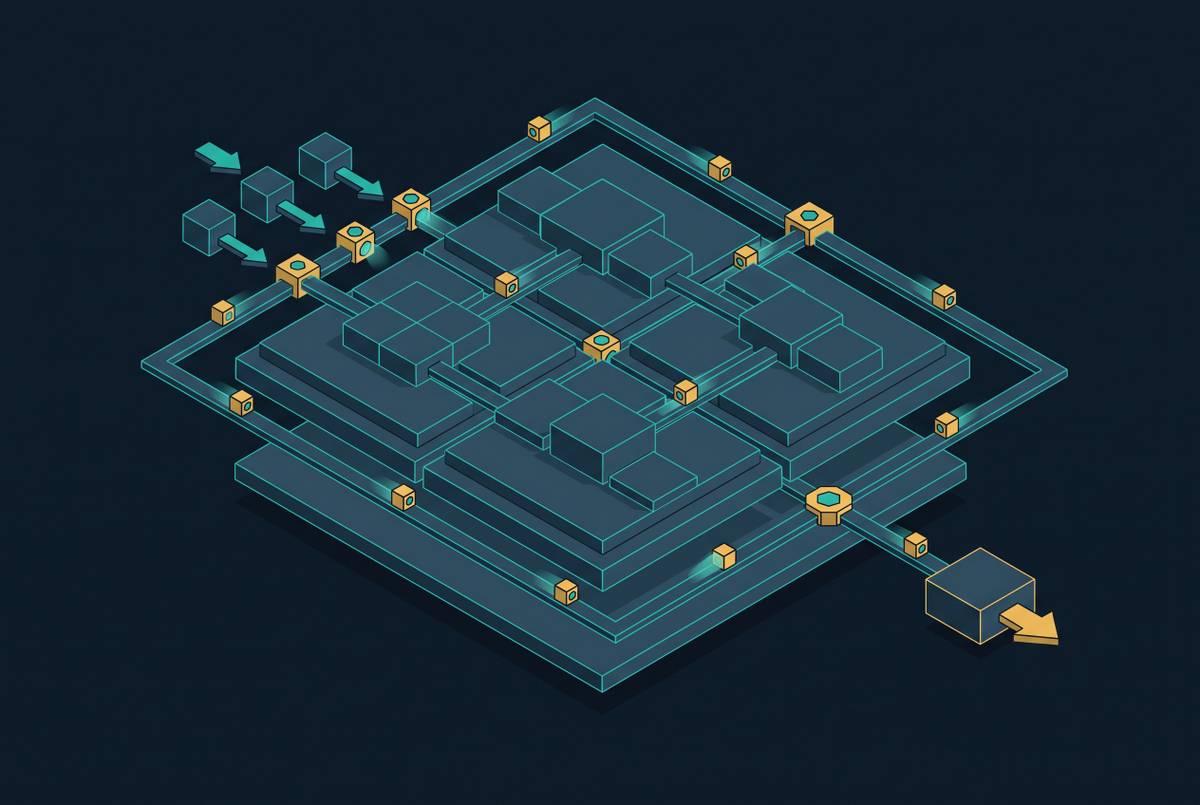
Those channel roles need a shared link to what happens in the business. The data substrate has four required components, namely clean UTM architecture, a consistent lead source field in the CRM, offline conversion imports, and a weekly cadence for refreshing those imports. UTM structure makes each touch attributable to a source, while the CRM field keeps lead origins consistent. Offline imports then push deal-stage data back into Google Ads and LinkedIn. Without that return path, the platform sees the response but not what became of it.
A form fill is not a sales opportunity. In a long B2B buying cycle, what happens between those events shows how well the budget was used. If the agent reads only the first event, it cannot distinguish a source that produces pipeline from one that produces paperwork. Connecting the CRM to the ad platforms gives the loop access to the later outcome. The weekly refresh cadence keeps that evidence returning rather than leaving the connection as a one-time setup.
LinkedIn tends to shape the early buying stages, while Google drives the final conversion. A last-click model gives Google all the credit. If earlier touches disappear from the data available to the loop, the agent may support cutting the channel that helped create the pipeline. This is a wiring problem before it becomes an argument about measurement philosophy.
How the agentic feedback loop is actually constructed — the five-stage cycle
With channel roles and outcome signals in place, generation starts from a brief, a brand kit, and prior performance data. The system drafts variants in batches. Volume is no longer the central bottleneck. The advantage moves downstream to how quickly the program learns from what it publishes. Generation is therefore the start of an experiment.
Tagging makes that experiment readable across many ads. Every published ad receives structured attributes, including theme, format, message, and creative element, so performance can roll up by attribute. Without those labels, more variants produce more per-ad guesswork. The program needs to learn which ingredients worked.
Launch puts those tagged combinations into testing, and read turns their results into the next decision. Underperforming combinations can be deprioritized within days rather than weeks, making interpretation a daily discipline. Early delivery signals arrive before the slower CRM outcomes, so even a fast read cycle needs the pipeline data that comes back through the substrate.
Iteration feeds each read into the next generation brief to close the loop. The next batch starts with evidence about which attributes worked for which ICP segment. Execution itself can also cross organizational boundaries. Omnicom reported on its Q1 2026 earnings call that it had executed real client media buys through an agent-to-agent framework using the Ad Context Protocol. That example shows agentic execution reaching media buying, while the five-stage loop explains how execution becomes learning.
Where human judgment governs the loop — and why removing it creates compounding risk
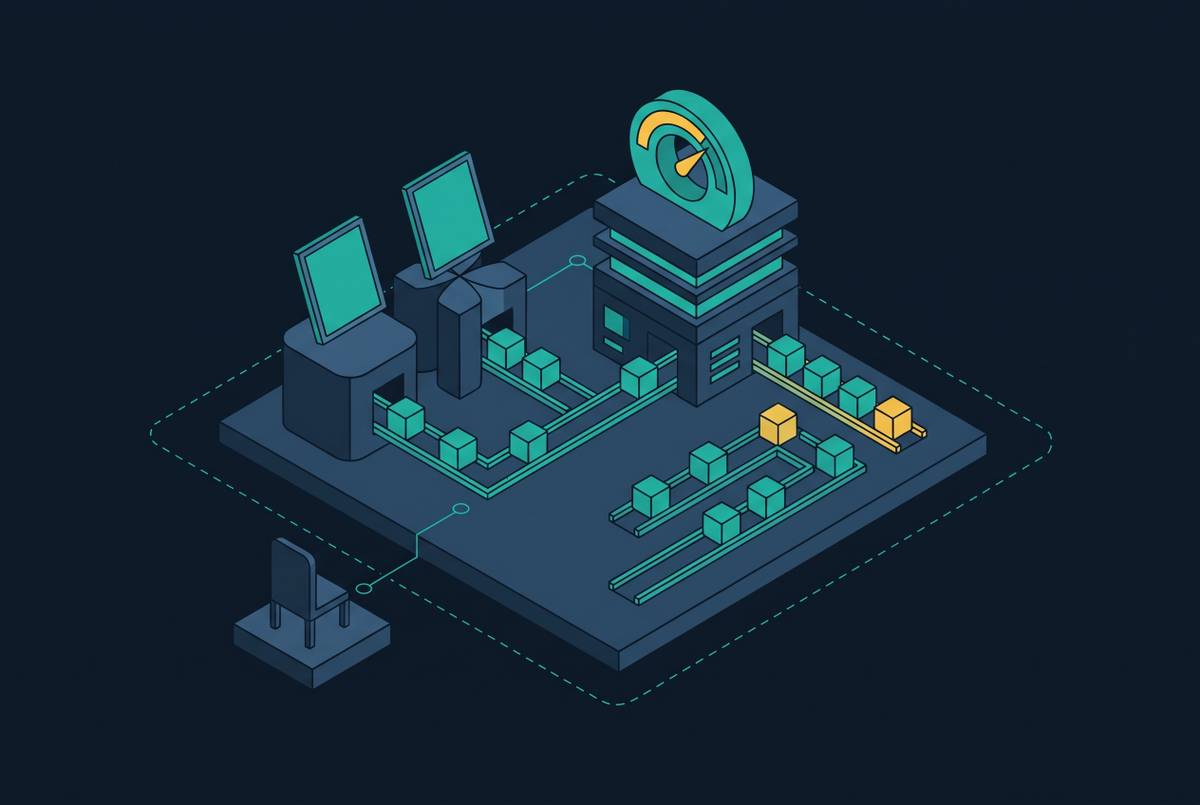
Human gates need to be built into this architecture so they do more than stop it in an emergency. Continuous execution does not require continuous autonomy. The system needs three points where a person authorizes a consequential action before the loop proceeds. Those gates make the program governable at speed, rather than asking the business to accept every decision an agent can technically execute. The distinction is between doing the work and owning the bet.
The first gate covers offer and pricing claims. A human must verify them before launch and re-verify them on each automatic refresh cycle, because an incorrect price or unsupported claim can spread across hundreds of variants. The second gate covers brand safety and AI-disclosure compliance, with review against each platform’s current policy before spend begins, particularly for regulated verticals and sensitive audiences. As policy changes, a fixed ruleset gives too little protection. These reviews address different risks, so neither substitutes for the other.
The third gate governs authority to increase spend. An agent may identify an early winner, but a human must decide what the business is prepared to commit on that evidence. Here the bottleneck moves from execution capacity to decision-making speed and strategic judgment. A named expert owns the consequential, ambiguous calls and can be held responsible for their outcomes. Without that ownership, faster execution simply gives mistakes more room to propagate.
How do you build a B2B paid media strategy where campaign data compounds over time?
Each cycle must leave evidence that changes the next one. That evidence shows which audience segments responded, which creative attributes drove pipeline events, and which offers moved deals. Faster iteration gives the system more chances to use what it learns, while keeping the data lets it build on that learning each time. After six months of continuous loops, the program has an accumulated context for its next decision. Six quarterly campaigns fall short of that structure when what they teach stays in separate post-mortems.
In the quarterly model, a finding may survive as a document that rarely reaches the next brief. In the continuous system, it becomes part of the agent’s context and the channel’s bid history.
Accumulated signal also changes what the system can diagnose. Instead of only tuning the ad platform, it can distinguish among a creative problem, a landing-page problem, and an attribution gap. An offer reaching the wrong audience calls for a different response from an offer the right audience rejects. But this advantage is not automatic forever. If the CRM connection drifts or attribution degrades, the loop can begin compounding noise, which makes maintaining the substrate part of learning.
What to evaluate when choosing how to operate this architecture
A software dashboard does not take responsibility for the substrate, govern budget decisions, or interpret what the loop is learning. The architecture needs someone accountable for all three. The platforms named here each have a job, with Google Search capturing intent, LinkedIn reaching the buying committee, and the CRM sending deal-stage evidence back through conversion imports. Those capabilities do not, by themselves, add up to an accountable operator.
A traditional agency model introduces a timing mismatch. People who check in periodically can reproduce the quarterly-reset rhythm even when their tools run continuously, because governance and escalation still follow the agency’s schedule. In-house operation faces a different constraint, as attribution architecture, agent governance, creative attribute taxonomy, and CRM connectivity span more disciplines than a single hire or small team can sustain. When staff leave, the business can also lose what they know.
The recommended model joins continuous agent execution with a named expert who governs consequential decisions. It is a delegated function, with architecture and accountability together, rather than a managed-software relationship or a traditional agency engagement. A team evaluating an internal operator, agency, or delegated model should ask who owns CRM imports, creative tagging, human approvals, and the evidence used in each new brief. That evidence must survive when a contract ends, a person leaves, or a quarter closes.