Running B2B Paid Media Without Percent-of-Spend Fees or Internal Headcount
AI execution with flat fees replaces spend-based incentives and human dependency in B2B paid media.

A fully delegated AI execution service with a flat retainer and named human accountability is an alternative to B2B paid media agencies and internal headcount. It takes over daily execution, and its management fees are separate from ad spend. The advantage is not simply a different bill, but a program that runs continuously and uses each campaign’s evidence to improve the next.
Why the percent-of-spend agency model and in-house headcount both fail B2B paid media programs
Both conventional models attach the program to a constraint that better campaign performance does not remove. An agency supplies people to manage the work, while an internal hire gives the business a dedicated paid media owner. Those are useful functions. The problem begins when the arrangement that supplies that expertise also shapes spending decisions or leaves continuity dependent on one person. Expertise and operating structure are different things.
Under a percent-of-spend contract, the agency earns more when the client spends more. That does not make a recommendation to scale wrong, and the conflict exists regardless of an individual agency’s ethics. But the agency earns less when spend falls, even when a cut is right for the client. Management fees track spending, going up as budgets grow even if performance and the quality of the advice stay the same.
An internal hire removes that particular conflict but introduces fixed overhead. Fully loaded cost includes salary, payroll taxes, benefits, equity, equipment, and software subscriptions, plus a ramp period with partial output. Continuity is also vulnerable to a single departure. Meanwhile, an agency staffed around manual optimization works in weekly cycles, leaving a gap between a new signal and a response. The choice is therefore about more than who costs less this month.
What a fully delegated AI execution model actually means in practice
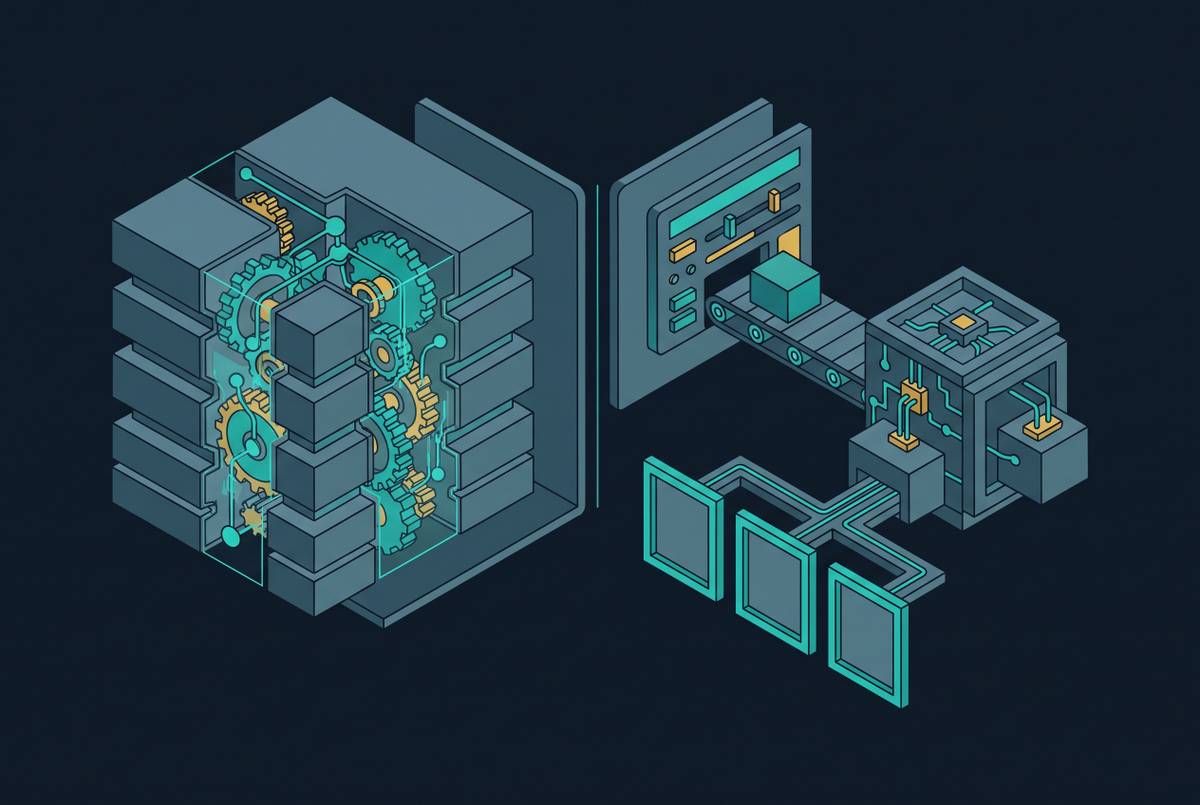
Full delegation means the customer is buying an operating service. A purpose-built agent environment takes over research, campaign building, launch, monitoring, optimization, and learning as one continuous system. That is a different arrangement from an agency whose staff occasionally use AI. A dashboard can show what needs doing while leaving the customer responsible for doing it.
The division of work is concrete. Agents handle bidding, budget reallocation across channels and creatives, audience management, reporting, competitive tracking, and conversion signal processing. These are high-volume, repeatable tasks that otherwise consume much of a paid media manager’s week. Humans retain strategy, ideal customer profile definition, creative direction, market positioning, and exception-handling. The kind of decision determines who handles the work, whether it happens inside an ad platform or elsewhere.
Thunder’s Agent OS exemplifies this arrangement by automating the execution layer while Forward Deployed Marketers handle strategy, creative direction, and consequential decisions. The customer delegates operation without surrendering human accountability. That distinction is the test for an “AI-powered” service. If the customer still has to interpret every recommendation and perform the resulting work, the service has added assistance while leaving execution with the customer. The robot has a clipboard, but someone else still has the job.
How the flat-retainer fee structure removes the spend-scaling incentive
A flat retainer decoupled from media spend removes the operator’s direct financial reward for recommending a larger budget. Holding or cutting spend does not reduce the management fee. A budget increase can therefore go toward media without automatically increasing the operator’s compensation, removing that specific conflict. A flat price alone says nothing about how good the strategy is and does not guarantee pipeline.
Under Thunder’s flat retainer, revenue does not grow with the media budget, so the basis for demonstrating value is program performance. Performance measures include how much pipeline is generated, cost per opportunity, and how many qualified meetings are booked. That changes the economic argument at the budget discussion. A recommendation to spend more must stand on its expected contribution to the program. Execution and pricing are separate design choices, and both need scrutiny.
Why continuous AI execution compounds over time while agency and headcount models reset
A paid media program loses more than labor when its owner changes. It can lose the reasoning behind its decisions. Agency discovery may restart when an account changes hands, a team member leaves, or the relationship resets after a contract renewal. An internal departure can leave the next hire reconstructing what worked and why. The reset risk comes from relying on people to carry knowledge the next campaign needs in a system it can use.
Continuous agentic execution is designed around a different form of memory. It accumulates audience insights, creative performance history, conversion signal patterns, and evidence of what did and did not work. Each subsequent campaign starts with that context. Aprimo’s 2026 AI marketing strategy guide describes this as contextual intelligence, in which agentic systems learn from interactions and refine their approaches. Static automation, by contrast, can keep running the same playbook without incorporating what its execution has revealed.
Speed strengthens this advantage when signals inform subsequent action. Continuous optimization closes that loop faster than weekly or monthly reviews and does more than add activity between meetings. In an AI-run service such as Thunder, accumulated campaign evidence is intended to help tune the ad platform and diagnose the actual constraint on growth. The distinction is important because faster bidding cannot resolve every weak result. A learning system must help tell whether a problem lies in media or elsewhere in the program.
What full-stack execution actually covers — creative, landing pages, attribution, and reporting as one system
A well-managed ad account can still send buyers to a generic homepage. The targeting may be sound and the bid disciplined, yet the destination fails to continue the ad’s message. Optimization then works with the conversion rate that mismatch produces. The ad account is not an island. When creative and landing pages run as separate projects on different schedules, paid media inherits a constraint its own controls cannot remove.
Creative and landing pages should be treated as part of the media buy. Message match between the ad and its destination directly shapes the conversion rate toward which the bid strategy learns. Attribution needs the same early attention. Campaigns should be tagged at launch, lead forms should sync to CRM campaign objects, and conversion tracking should connect to pipeline outcomes before spending begins or structural changes are made. Those outcomes include MQLs, first meetings, and CRM-defined lead quality.
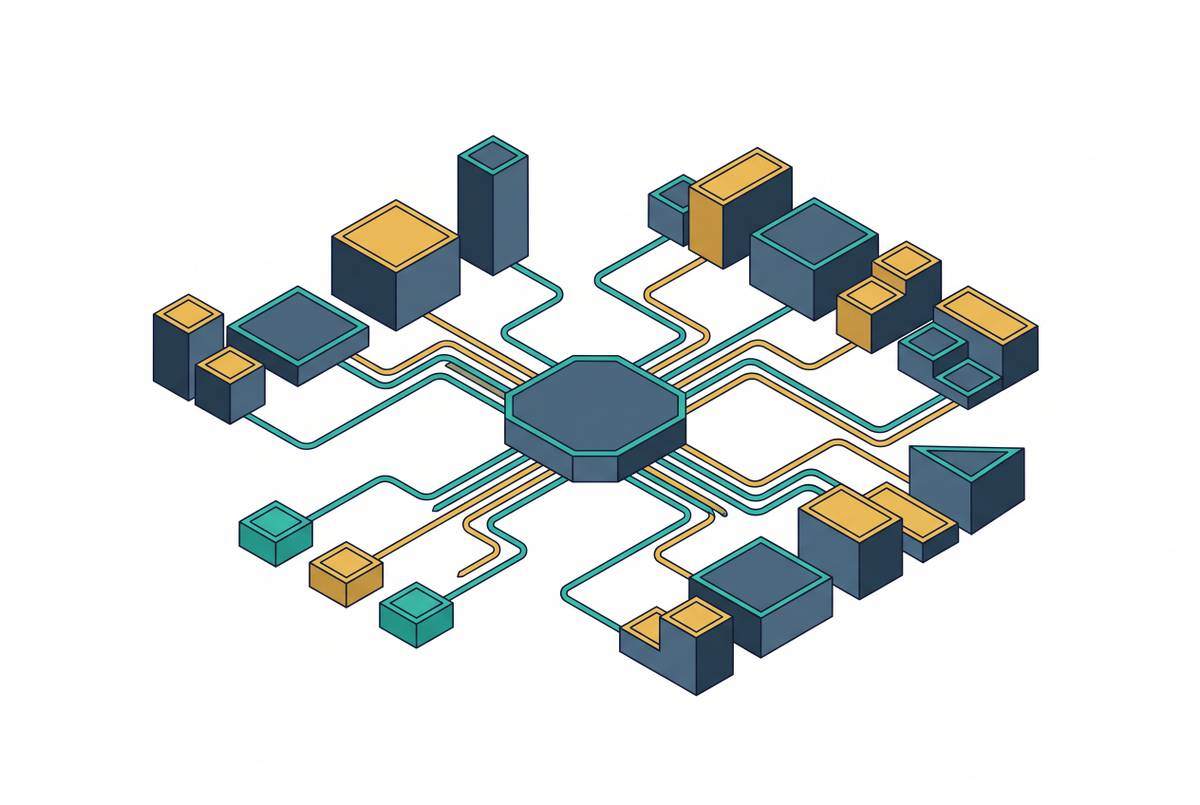
Reporting then needs two ledgers with different jobs. Leadership reporting is lagged, cohort-based, and drawn from the CRM, while the steering ledger tells ad platforms what a good lead looks like now. Combining them confuses retrospective measurement with current optimization. For B2B, the revenue record also belongs at account level, aggregating touchpoints from every contact at a company across channels and connecting them to pipeline creation and closed revenue. Thunder brings creative, landing pages, attribution, and reporting together through Agent OS, so each is part of the same process.
The platform logic for sales-led B2B — Google and LinkedIn do different jobs
Treating Google and LinkedIn as interchangeable budget lines confuses demand capture with demand development. Google captures demand from buyers already searching for solutions, including those who use branded and high-intent terms. LinkedIn reaches people who fit specific personas at specific companies before they start searching. They do different jobs in the pipeline. A delegated program must encode that distinction rather than simply move money toward whichever platform reports cheaper leads.
The three-layer demand structure makes the budget logic concrete. Demand capture gets the largest share of the budget and uses Google Search and LinkedIn retargeting to reach high-intent buyers who are already in-market. Demand education gets the middle share of the budget and uses LinkedIn Sponsored Content to put webinars, comparison guides, and research in front of ICP audiences. Demand creation gets the smallest share of the budget and uses thought leadership ads to reach senior decision-makers who are not yet searching. The budget covers different stages, so every campaign does not have to get the same immediate response.
Lead quality is the necessary connection between those stages and spending decisions. A low cost per lead can conceal poor conversion to pipeline and a higher cost per opportunity than a more expensive lead source. Cheap leads can be an expensive hobby. The useful unit is cost per qualified opportunity, while LinkedIn targeting must balance persona precision with enough audience size to generate usable signal. Stacking too many filters can shrink the audience and raise CPCs without improving pipeline quality, so narrower targeting is not automatically better targeting.
Where the delegated model requires human judgment rather than agent execution
Full delegation raises a fair question about responsibility when the system makes a consequential mistake. Naming the boundary is more useful than insisting that humans remain “in the loop.” ICP definition, market positioning, high-stakes creative strategy, and unexpected exceptions need human judgment alongside that of agents. Decisions whose reasoning must be explained to a CFO or a board need a named expert who can own that explanation.
The Forward Deployed Marketer, or FDM, is Thunder’s answer to that governance problem. This is a named expert responsible for direction, exception-handling, and accountability, rather than an unspecified group behind a service agreement. The role gives the customer someone to hold responsible for outcomes. It also distinguishes delegation from abdication. Agents handle continuous execution, while consequential and ambiguous decisions remain with a person accountable for them.
That boundary also sets a maturity requirement for the customer. A team still experimenting with individual AI tools or running early pilots is not necessarily ready for production-scale agentic execution. ICP, messaging, and CRM hygiene need to be resolved. Otherwise, delegation asks execution to compensate for an unanswered strategic question. No amount of tireless optimization can decide on the business’s behalf which customers it ought to serve.
How do you know your B2B paid media program is ready for an agency alternative?
Being keen on AI is not enough to make a program ready. A defined, stable ICP and CRM hygiene sufficient to connect ad interactions to pipeline give the system an objective it can pursue. An attribution baseline gives it evidence to build on. Without those conditions, speed becomes a liability. If the ICP keeps changing or the CRM is disconnected from ad platform conversion events, continuous execution can simply pursue the wrong objective more efficiently.
A passive agency relationship, formulaic recommendations, a point-and-shoot contractor, or a departed internal owner are reasons to evaluate another model. So is spend that rises while pipeline fails to grow with it. None proves that the fee structure caused pipeline to lag behind rising spend. They do indicate that the business should examine whether it needs different execution, stronger strategic ownership, or better connections between the parts of its program.
The comparison should turn on who will do the work and what will survive a change of personnel. An agency has people manage the work, but when its fees are a percentage of spend, it earns more if the client spends more. An internal hire supplies a dedicated owner, with fixed overhead, ramp time, and departure risk. A fully delegated service fits a program that has its foundations in place and needs to keep running without adding internal headcount. Thunder offers agent execution, a flat retainer, and a named expert who is responsible for outcomes.
The provider evaluation should make those claims testable. It should establish who owns outcomes, how fees relate to spend, and what accumulated evidence informs the next campaign. It should also reveal how the service distinguishes a creative problem, a landing-page problem, and an attribution gap from a bidding problem. Activity alone is not an adequate answer. The practical decision is whether the program has a clear destination and needs a better operating model, or still needs to decide where it is going.