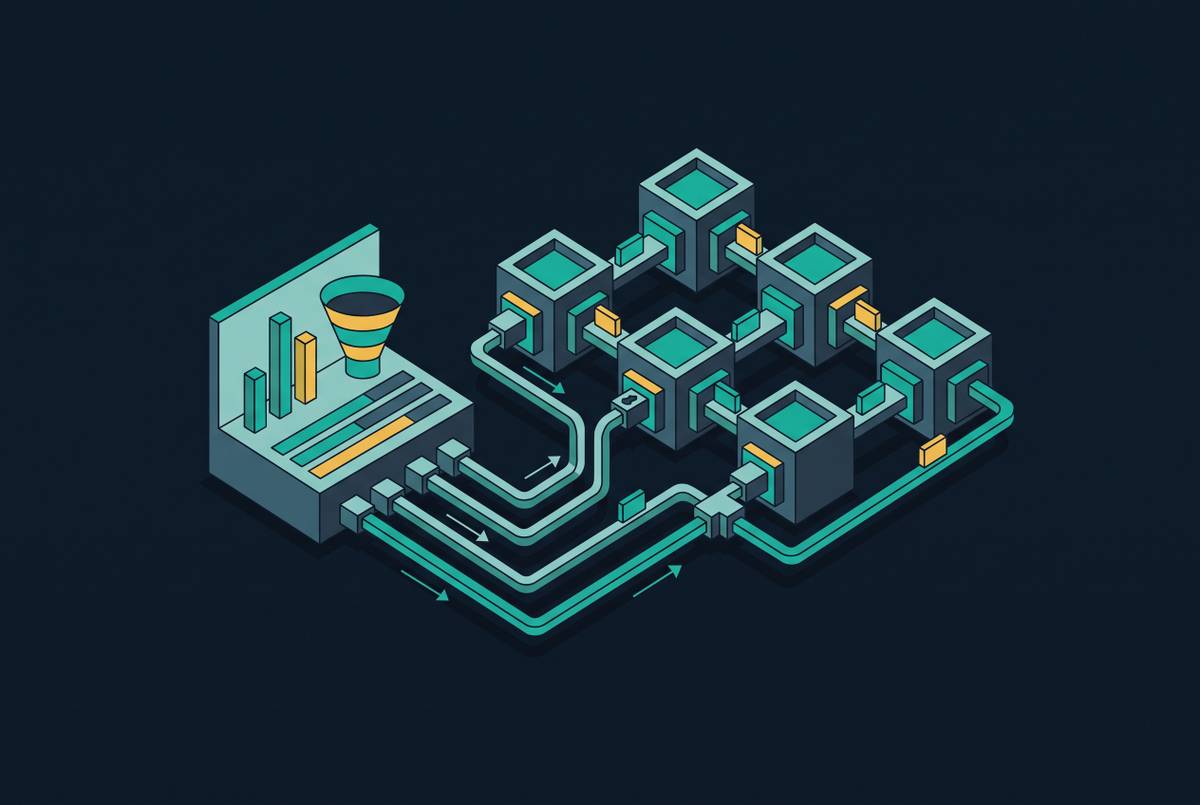
Reporting Pipeline Architecture for Agentic B2B Marketing Programs
Agents need structured data flowing back into memory, not dashboards showing what already happened.
A team builds an agentic campaign program, agents researching accounts, agents routing leads, agents optimizing bids. The dashboard was never the problem to solve. The problem is that a dashboard treats every output as a finish line, when an agentic system needs every output to be a starting line for the next decision.
The defining architectural shift in 2026 is orchestration: agents chain multiple tasks together, pass context between steps, and execute multi-stage workflows, so every output is also an input to the next step. A reporting layer built as a dashboard sits outside that chain. It shows a human what happened, then stops. The agent components that make compounding possible, persistent memory, tool access, multi-step planning, only function if data flows back into them. Starve those components of structured input and they don't fail loudly. They just quietly stop improving.
The old question a reporting stack answers is "what happened?" The question an agentic system needs answered is "what should the agent do differently now?" Those require different architecture. A pipeline built for the second question has to feed scores, flags, and structured evidence straight into agent memory, where a human can still read it, but where an agent can also act on it without a human translating first.
What an agentic B2B marketing program consists of
An agentic marketing program is a set of agents with distinct jobs: research, enrichment, campaign optimization, analytics. Each produces output the others depend on, and that interdependence is what the reporting pipeline has to serve.
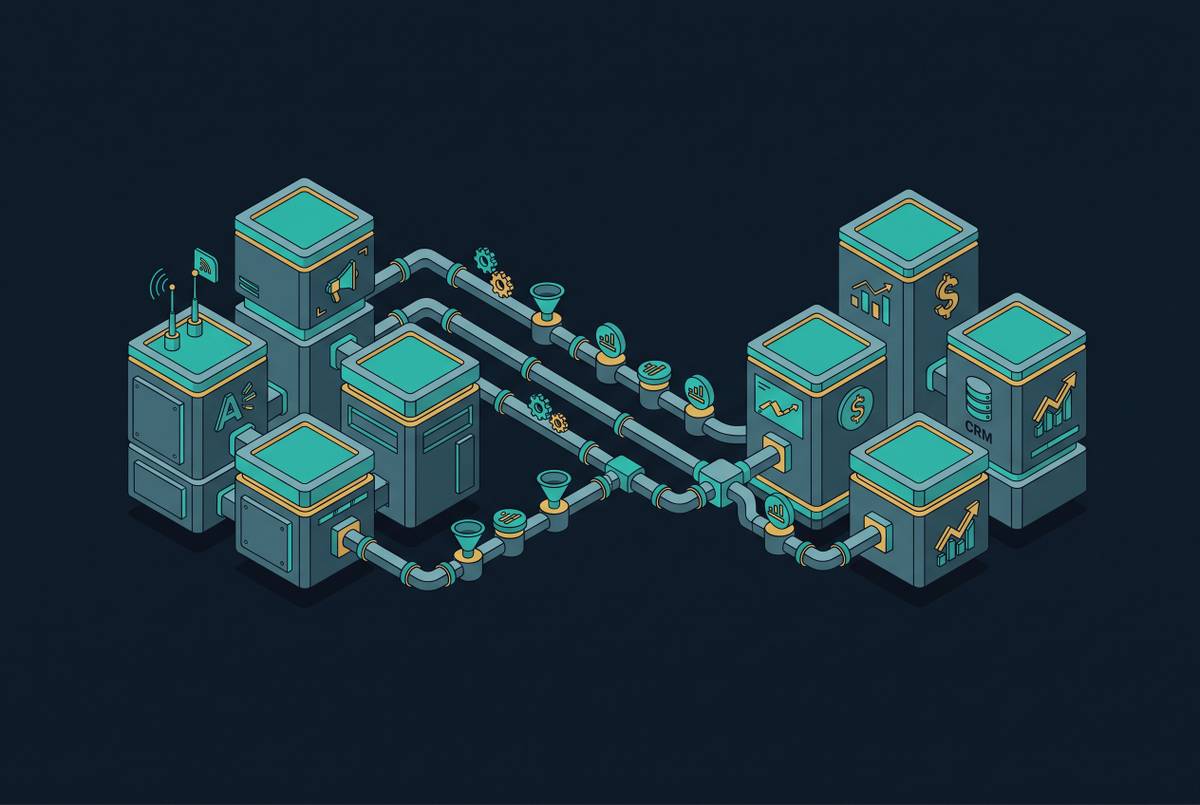
In production programs, four agent applications generate the pipeline that actually matters: account research and enrichment, signal monitoring and lead routing, campaign optimization, and analytics and reporting. Each one produces structured output the others need to function. A research agent's enrichment data feeds a routing agent's prioritization logic. A campaign optimization agent's performance data feeds the analytics agent's diagnosis. Break that chain and each agent is just working in isolation with a fancier label.
That's exactly the trap many teams fall into without noticing. Deploying separate agents for content, outbound, and account-based marketing recreates the same fragmentation pre-AI marketing stacks had: four tools, four data silos, four optimization loops that never talk to each other. Swapping a human-run silo for an agent-run silo automates the disconnection instead of fixing it.
The fix is multi-agent orchestration, patterns like DAG-based orchestration and agent chaining, and those patterns demand a data layer that agents can read directly, not one built only to be displayed on a screen for humans. That's a real infrastructure requirement. Agents sit between source systems (CRM records, intent data, product usage) and execution channels, connected through APIs to platforms like Salesforce, HubSpot, and ad platforms.
What does "persistent memory" actually require from reporting? Each agent needs access to what worked, what failed, and what changed, as structured evidence that feeds directly into the next planning cycle. Without that, every planning cycle starts from zero, no matter how many campaigns ran before it.
Where the data that matters lives
Knowing what the pipeline needs to serve is one problem. Finding where that data actually sits is a separate, messier one.
Signal quality, account progression, pipeline influence, and buying-committee behavior, the things that actually determine whether a program compounds, are scattered across CRM, ad platforms, intent data sources, and offline interactions. No single system holds enough of it by default. That scattering is structural, built into how the data is generated and stored across these systems.
Consider the three-tier attribution model many teams use without fully realizing they're using three different, incompatible truths. GA4 data-driven attribution informs budgeting decisions, platform data informs in-platform optimization, and CRM revenue data represents the ground truth of what actually closed. Each tier answers a different question. Collapse them into one number and the result isn't simpler, it's wrong in a way nobody can trace back to its source.
Attribution windows make this worse in B2B specifically. When a window is shorter than the actual sales cycle, early touches age out of the data before the deal ever closes. An agent optimizing budget against that aged-out data will misallocate spend systematically, not occasionally, because the data it's reading has already thrown away the signal it needs.
Enrichment agents are supposed to be watching live signals: job changes at target accounts, how deeply someone is engaging with content, funding announcements, competitor engagement patterns. That data is only useful if it flows back into the reporting pipeline in near-real time. A job change discovered three weeks late is a missed window, not a signal.
Even platforms built to close this loop require manual architecture to do it. LinkedIn's Revenue Attribution Report can track pipeline and revenue influenced by campaigns, but only when a CRM is connected through Business Manager. That connection doesn't happen automatically. Somebody has to build it. A lot of programs are running LinkedIn spend with no idea what revenue it actually touched.
Misalignment between sales and marketing compounds all of this. Several platforms now exist specifically to pull this fragmentation into one place: Dreamdata, HockeyStack, SegmentStream, Adobe Marketo Measure (formerly known as Bizible), and RevSure, with RevSure built to consolidate GTM data across CRMs, marketing automation platforms, ad channels, ABM platforms, and web analytics into a single source of truth. Their existence is itself evidence of how dispersed this data is by default. No agentic program gets this data handed to it cleanly. It has to be built.
How the reporting pipeline connects those sources into a feedback loop agents can use
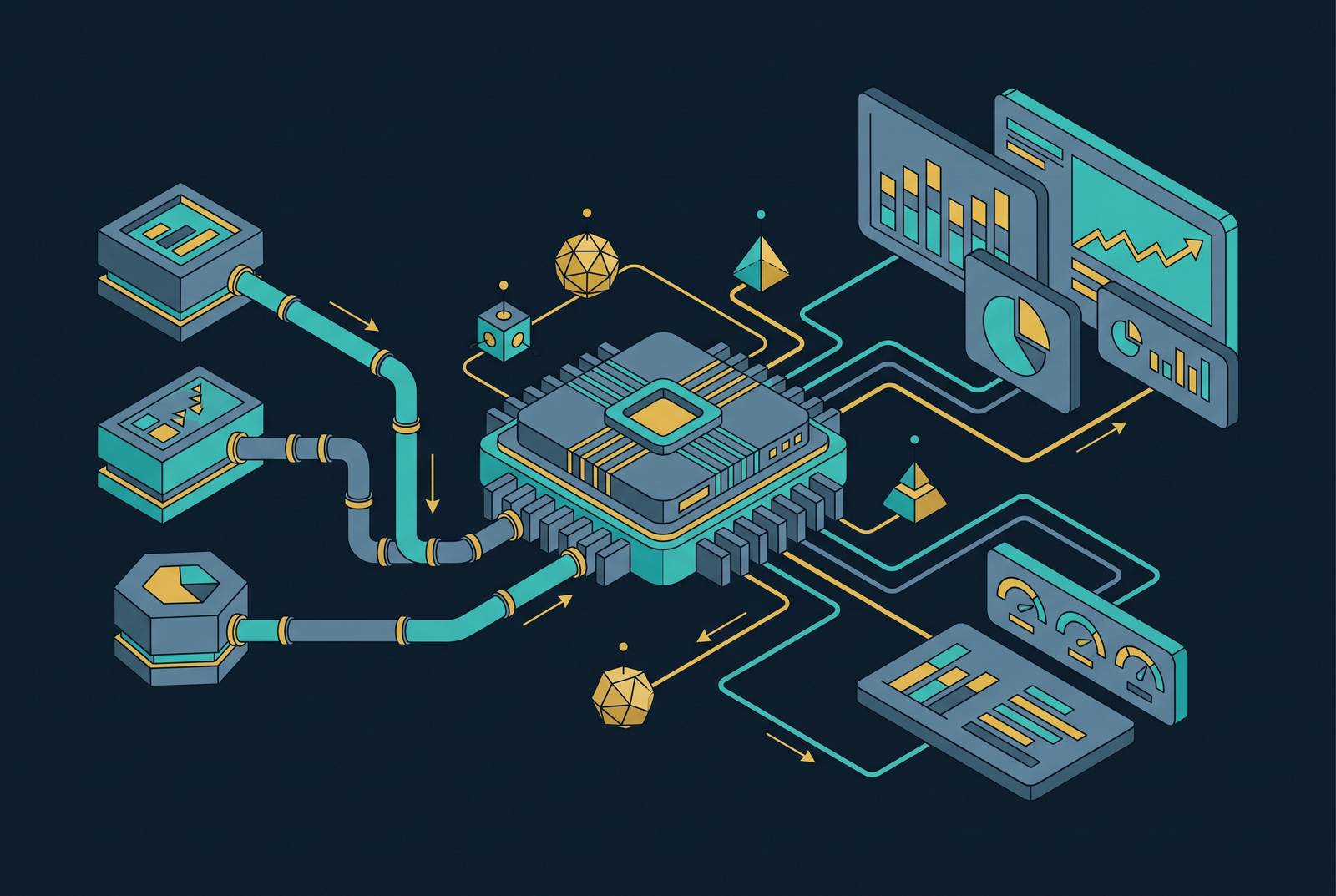
A reporting pipeline that closes the loop is a structured flow where outputs from execution feed straight back into agent memory, diagnosis, and the next decision cycle as machine-readable signals.
Operationalized for agents, the three-tier attribution model looks like this: GA4 attribution data feeds budget-level decisions, platform data feeds intra-campaign optimization agents, and CRM revenue data feeds the diagnosis layer that figures out whether the constraint is creative, the landing page, attribution itself, or the funnel. Each tier routes to a different consumer in the system.
"Machine-readable" has a specific meaning here that's worth being precise about. An agent can't act on a chart. It needs structured outputs, scores, classifications, flags, ranked lists, that can pass as context into the next step of the chain. A human reads a bar chart and draws a conclusion. An agent needs the conclusion already encoded as data.
Campaign optimization agents illustrate what this looks like in motion. They monitor performance across channels continuously, adjust bids against real-time conversion data, shift budget from underperforming placements to overperforming ones, and swap creative when fatigue signals appear, all within boundaries human strategists set. None of that works without a reporting pipeline constantly supplying the signals those decisions are made on.
The enrichment loop shows the stakes of speed. A lead who downloaded a piece of content months ago, then just accepted a new role at a target account, needs to be re-scored, enriched, and surfaced to the SDR team automatically. That only works if the pipeline connects job-change data back to CRM records in hours, not weeks.
The creative and landing-page path works the same way. When a B2B ad gets clicked, an agent can rewrite the landing page copy to match the visitor's industry before the page finishes loading. That rewrite is only accurate, rather than generic filler, if the pipeline hands the agent real account intelligence and prior performance data in that instant.
Every campaign should leave behind structured evidence, what audience, what creative, what message, what outcome, so the next decision starts from that accumulated history instead of a blank slate.
What the reporting pipeline must diagnose, not just measure
A pipeline that only measures activity, clicks, conversions, cost per lead, can't tell a program where its actual growth constraint sits. Diagnosis means the pipeline has to identify whether a constraint is a creative problem, a landing-page problem, an attribution gap, or a misaligned funnel.
Most B2B teams are still measuring what's easy to measure rather than what matters. MQLs, email open rates, and website sessions don't predict pipeline quality. A pipeline calibrated to those numbers won't just fail to help. It will produce confident conclusions that happen to be wrong, which is worse than no conclusion at all.
A diagnostic pipeline tracks SQLs, pipeline value, customer acquisition cost, and payback period, broken out per campaign and per channel. Those are the numbers that actually show whether a program is producing revenue or just producing activity that looks like progress.
A sustainable paid media channel in B2B runs a CAC payback period of six months or less, and that figure marks the threshold to watch. Cross that line and the question becomes which constraint is causing the slowdown, not whether to spend more.
Channel comparisons fail for a similar reason when they're flattened into one number. Google Search catches buyers who already have intent. LinkedIn builds awareness before a buyer has even entered a buying cycle. Mix their performance data together and the pipeline loses the ability to say which channel is actually underperforming, or why.
Attribution windows cause a diagnostic failure here, not just a data gap, when the window is too short to capture the real sales cycle. When the window is shorter than the real sales cycle, early touches age out before the deal closes. A good pipeline flags this as a measurement problem, not as weak top-of-funnel performance, and that distinction changes what the team does next entirely. Blame the funnel and a team tightens the wrong screw. Blame the window and they fix the thing that was actually broken.
Analytics and reporting agents already save real hours per week in production programs. That time is only worth anything if the agent is diagnosing a constraint. A measurement system tells a team what happened last week. A diagnostic system tells them what's actually wrong, which is a different job entirely.
Where human judgment sits inside the pipeline
The strongest objection to agentic reporting is the fear that removing humans from the loop creates liability nobody can trace back to a decision-maker. That's a fair worry, and the answer to it is architectural: decide in advance which decisions agents own and which ones humans own, then build the pipeline so that boundary is visible rather than assumed.
Two mistakes derail most deployments, and they sit at opposite ends of the same failure. Giving agents too much autonomy before the process is documented is one. Pulling human review out of the loop too early is the other. Both are failures of pipeline architecture, not failures of judgment, and the fix is the same either way: write the boundary down before the agent starts acting.
BCG's framework is a useful way to think about where that boundary should sit. It names three models: augmented, where AI enhances a human's decision; assisted, where AI acts as a real-time partner; and autonomous, where AI acts independently. Which model fits depends on the stakes and the nature of the decision, not on some general preference for automating more or less.
For consequential, ambiguous calls, the split looks like this: agents handle the continuous work, bid adjustments, enrichment, creative swaps, signal routing, while humans govern the decisions the business is accountable for, ICP definition, budget strategy, channel mix, and what counts as a qualified lead. An agent surfacing which accounts are showing intent right now, and routing the warm ones to sales, is doing its job well. That agent deciding who gets contacted and when crosses into a decision humans should own. A content agent flagging posts that need refreshing is useful. That same agent publishing changes without review is a different kind of system entirely.
What makes this boundary real, rather than a slide in a strategy deck, is specific: approval checkpoints at the high-stakes decision nodes, structured outputs that a human reviews instead of raw agent logs nobody has time to read, and a named person accountable for each governed decision's outcome.
The institutional knowledge objection deserves a direct answer, because it's the one people raise most. A well-architected pipeline accumulates structured evidence, audience insights, what worked, what failed, as a persistent asset the program owns. That evidence doesn't walk out the door when a person leaves the team, because it was never stored in that person's head to begin with. It's what makes delegating judgment to a pipeline safe in the first place: the memory survives staff turnover, reorganizations, and whoever happens to be running the account this quarter.
How to sequence the build so the pipeline compounds instead of stalling
Most agentic programs that stall didn't fail because the agents were weak. They failed because the pipeline was built in the wrong order. Teams automate data collection before their CRM data is clean, deploy optimization agents before a diagnostic layer exists to tell those agents what to optimize toward, or start tracking metrics that were never going to predict revenue in the first place. Get the sequence right and the system learns over time; get it wrong and it just keeps running in place.
Everything depends on the foundation underneath it. Teams with clean CRM data, clear internal processes, and a reputation that extends beyond their own website are seeing real returns from these systems. Teams missing those basics are just moving their existing problems around faster, with better tooling and the same underlying mess.
A workable build order follows directly from everything above. Define what "qualified" means in terms both sales and marketing will actually honor, since every metric downstream depends on that definition. Instrument the three-tier attribution model so budgeting, optimization, and truth stop getting collapsed into one number. Connect enrichment signals back to CRM records in near-real time, measured in hours, not weeks. Layer in optimization agents, but only within parameters humans have already governed. Add the diagnostic layer last, classifying whether a constraint is creative, landing page, attribution, or funnel.
Start with a single agent, measure it over an initial stretch, then expand from there. Lead enrichment is the fastest path to a measurable return, since it saves the most hours per week in production programs and produces the clearest immediate signal for the rest of the pipeline to build on. Every campaign that runs after that should leave structured evidence behind it, audience insights, creative performance, the specific constraint that was diagnosed, stored in a format the next agent cycle can actually ingest. That's the whole mechanism of compounding: each cycle starts from accumulated history instead of a blank slate.
This only works if the process feeding it was sound to begin with. Agents amplify whatever they're fed, a good process or a bad one, at whatever speed the orchestration allows. Automating a broken qualification standard produces more decisions built on top of the same mistake, faster than a human team ever could have made them alone.
Sources
- Agentic AI in B2B Marketing 2026: From Automation to Autonomy - HackMD
- AI Agents Are Eating B2B Marketing: What Works in 2026
- The Biggest B2B Marketing Trends We've Seen So Far in 2026
- AI Agents for B2B Marketing: What Actually Works in 2026 - Colony Spark
- AI Agents Running Marketing Operations in 2026: What Works
- B2B demand generation: the complete guide for 2026 - Guideflow Blog