Predictive Analytics Integration in Agentic Marketing Platforms
True learning requires predictive analytics baked into agents, not bolted on dashboards.
Agentic marketing platforms promise the same thing right now: agents that run campaigns on their own, optimize as they go, and free up marketers to do less busywork. That promise is real for almost every platform on the market today. But something splits these tools into two very different camps once you use them past the first campaign. Some platforms get smarter with every campaign they run. Others just run faster, over and over, without learning a thing. Whether predictive analytics is actually built into how the agent thinks or just bolted on as a dashboard feature determines which of those two camps a platform falls into.
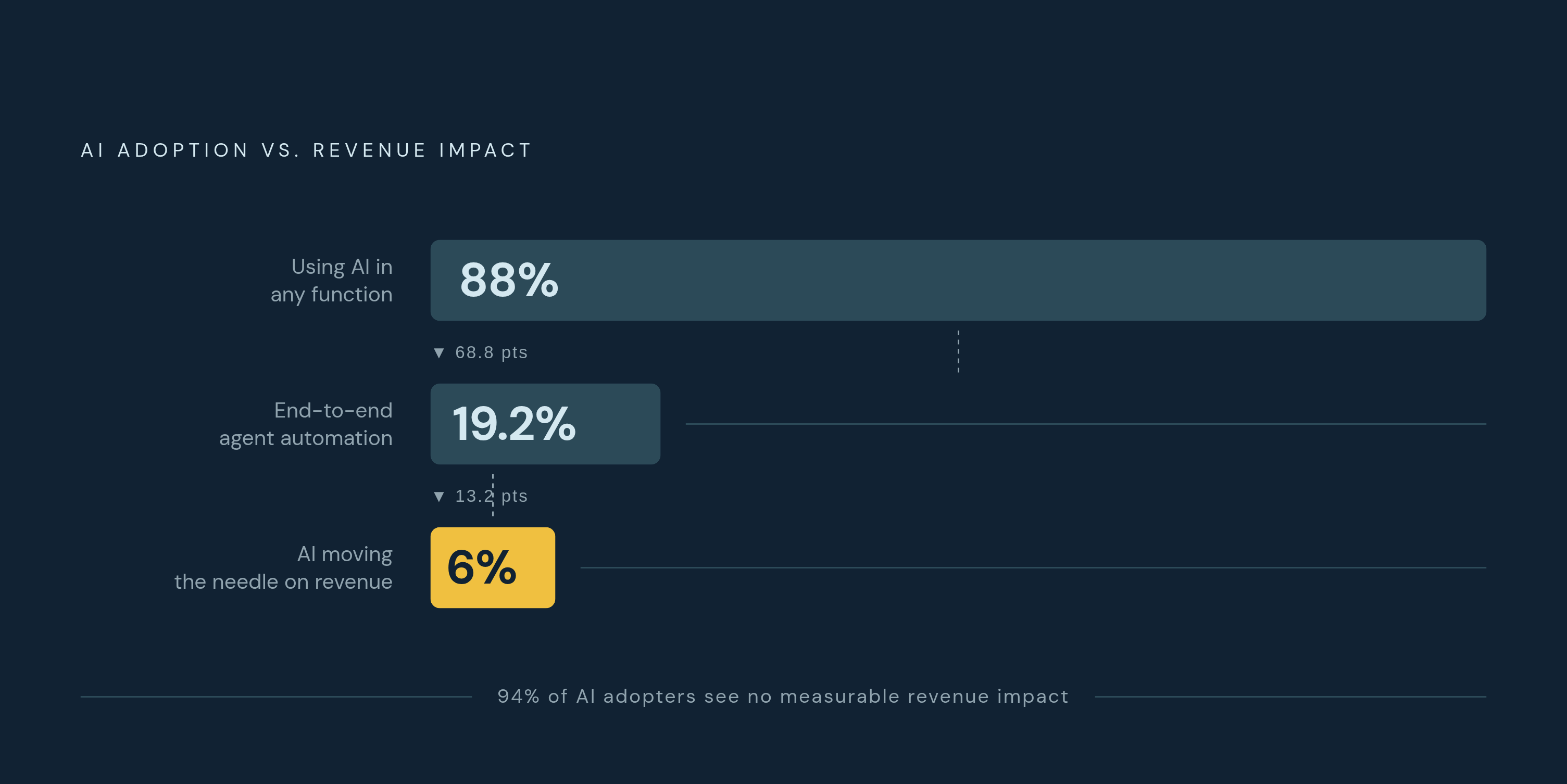
The numbers on AI adoption make the stakes pretty clear. Something like 88% of organizations already use AI in at least one business function. But only 6% qualify as high performers, meaning AI is actually moving the needle on revenue for them. And when it comes to agentic marketing specifically, only about 19.2% of companies have deployed AI agents for full end-to-end campaign automation. That gap between broad AI adoption and real end-to-end deployment is exactly where the next few years of competitive advantage will get decided.
What the agent loop does and where it breaks without prediction
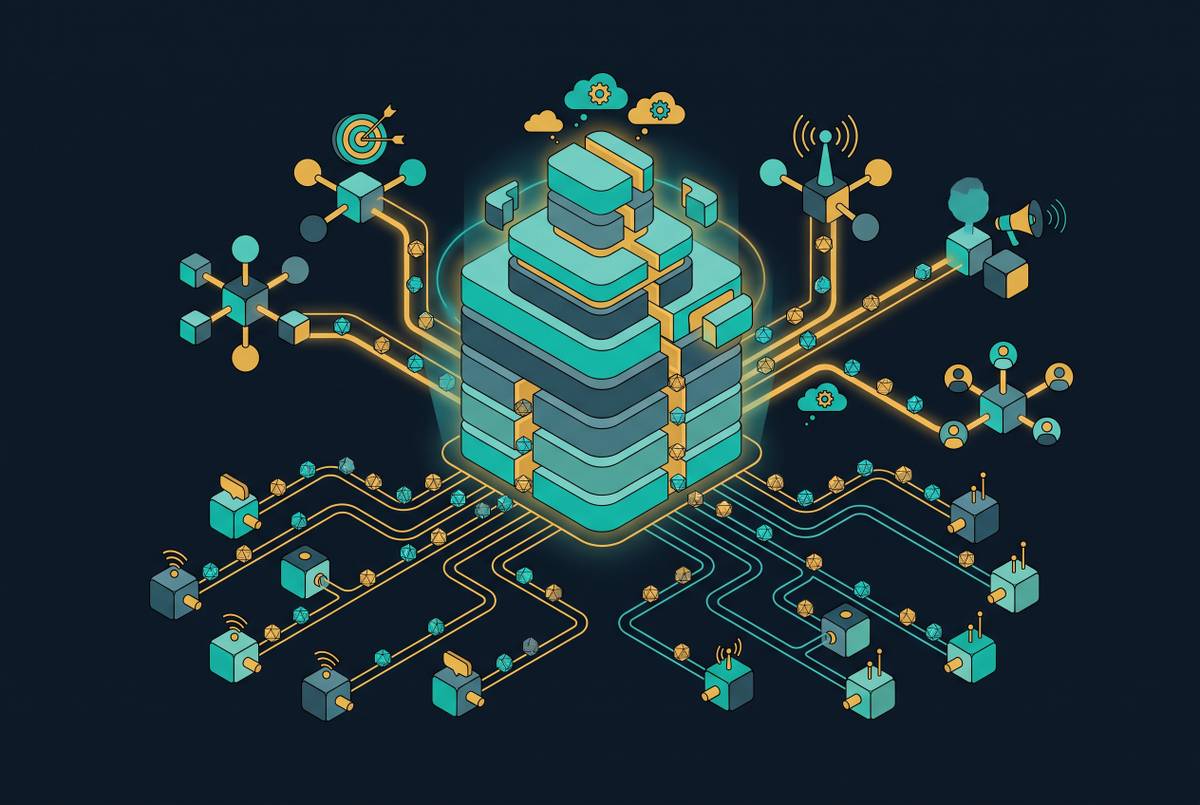
Every agentic platform runs on some version of the same loop: perceive what's happening, reason about what to do next, execute across connected channels, watch what happens, then adjust. It sounds smart. It sounds autonomous. And on the surface, it is.
If that loop is purely reactive, it's not intelligence. It's just automation with good reflexes.
A reactive agent waits for something to happen, then responds. Click-through rate drops, so it cuts spend. Cost per lead spikes, so it shifts budget. That's useful, sure. But it means the agent is always cleaning up a mess after the mess has already happened. It's optimizing the current state, not shaping what comes next.
A predictive loop works differently. Instead of waiting for a metric to fall off a cliff, it looks for the early signal that the cliff is coming. Take creative fatigue, a problem every performance marketer knows by heart. An ad starts strong, and over time, the same audience sees it so many times that engagement drops. A reactive agent notices the CTR decline and pulls spend, after the damage is done. A predictive agent picks up on the early warning signs, like rising frequency or slowing engagement velocity, and recommends a creative refresh before performance actually falls.
That's the whole distinction in one example. Reactive agents respond to damage. Predictive agents try to stop the damage from happening.
The three-layer data architecture that makes prediction possible
Prediction isn't a switch you flip on. It needs a specific kind of data setup underneath it, or the agent has nothing real to predict from, because without that data setup, there is no material for prediction. Three layers make this work.
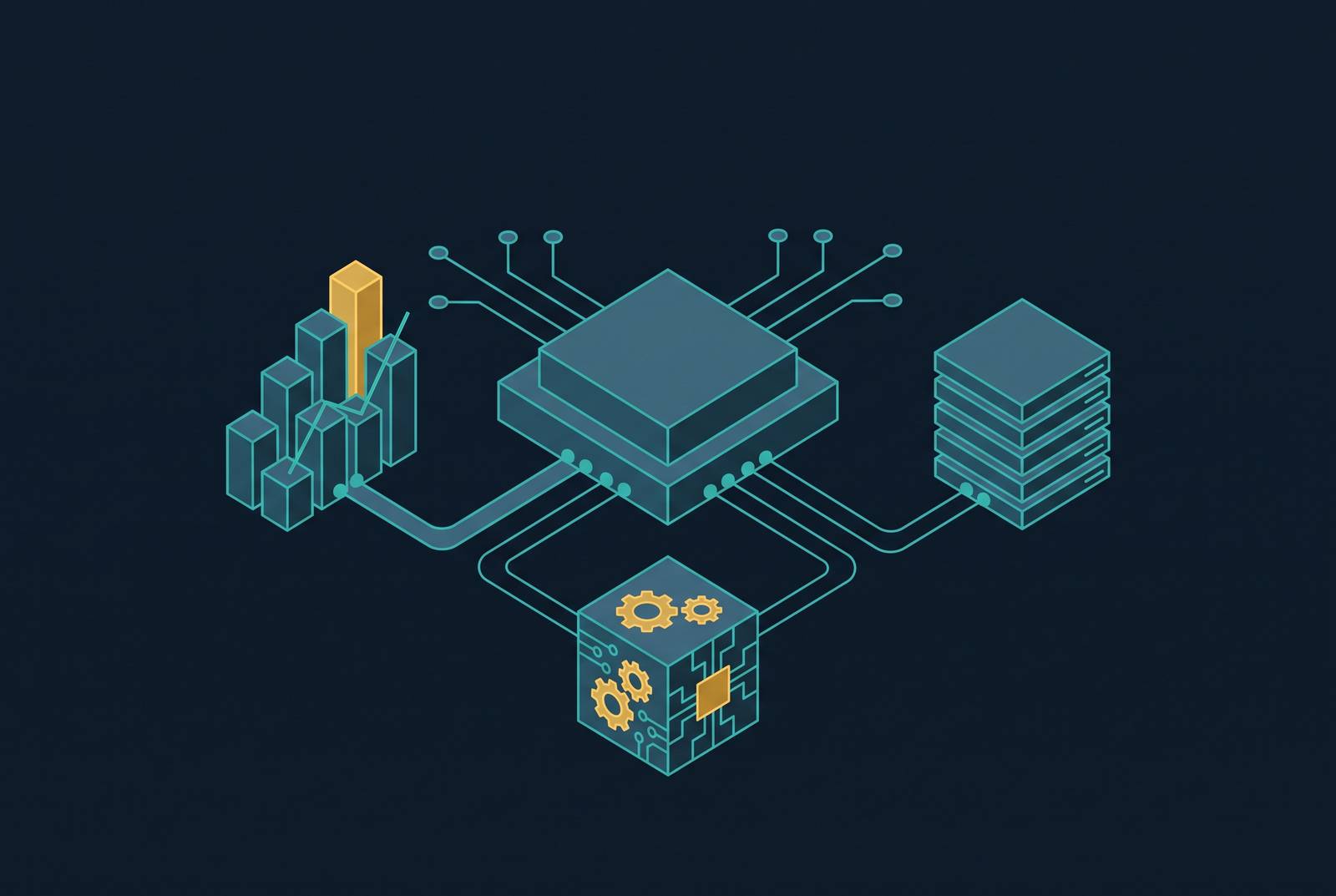
The ingestion layer pulls in data continuously, not in scheduled batches. That means first-party engagement data (what someone does on your site or in your emails), third-party intent signals (what someone is researching elsewhere), and contextual market intelligence (what's happening in the broader market). All of it flowing in at once, all the time.
The intelligence layer is where that raw data actually becomes useful. This is where the platform turns scattered signals into patterns: predicting buying windows, scoring accounts by how likely they are to buy soon. This is the layer that lets a platform spot an account that's in-market before that account ever fills out a form or requests a demo.
The orchestration layer takes those predictions and turns them into action. This isn't simple if/then logic anymore ("if they click, send email B"). It's the agent making an actual judgment call about the next-best action, based on what the intelligence layer forecasts is likely to happen.
6sense's Revenue AI platform is a solid example of this architecture in practice. It draws on intent data across a B2B network to flag accounts that are actively researching a category, sometimes before those accounts have ever visited the vendor's website. That's predictive buying-stage identification doing real work: helping sales and marketing teams prioritize accounts before those accounts have raised their hand.
But none of this works if the foundation is bad. The intelligence layer is only as good as what feeds it. Dirty or fragmented data doesn't just limit the predictions, it actively misleads them. An agent trained on bad signals will confidently optimize toward the wrong outcome, and it'll do it fast.
Where predictive analytics enters the campaign lifecycle, and what it changes at each stage
Before the campaign starts, prediction determines who gets targeted. Predictive models surface accounts already showing early in-market behavior, dark funnel activity, content consumption patterns, and third-party intent signals that a static list would never catch, replacing lists built off firmographic data such as company size, industry, and job title. That matters more than it used to, because 81% of the B2B buyer journey now happens before a deal ever officially enters the pipeline. If a platform is only reacting to signals from that final small remaining slice, it's already behind.
It gets more complicated once you add in who's actually involved in a buying decision. The average B2B buying committee has grown to about 8.2 people. That's not one contact to nurture, it's eight or more people across departments, each moving at their own pace. Predictive orchestration is what lets a platform identify those stakeholders and sequence outreach across all of them, rather than just hammering one inbox.
During execution, prediction changes how budget and bids get adjusted. A reactive agent waits for a channel to underperform, then shifts spend elsewhere. A predictive agent shifts spend toward channels forecasted to perform well given the current audience signals, acting before the underperformance appears in the numbers.
LinkedIn is a good example of why this distinction matters. The per-lead cost on LinkedIn for B2B SaaS can run anywhere from $80 to $300, which looks expensive next to something like $82 on Google or comparable benchmarks elsewhere. Judged purely on cost-per-lead, LinkedIn looks like the worse channel. But predictive analytics reframes the unit of measurement entirely, shifting the question from "cost per lead" to "cost per company influenced." Once you account for LinkedIn's reach across an entire buying committee inside one account, the math changes completely. An agent without prediction optimizes whatever metric is sitting on the dashboard. An agent with prediction optimizes for the outcome that metric was only ever supposed to represent.
On creative and messaging, prediction is what catches fatigue before it shows up in performance. Thought Leader Ads, for example, have shown a median click-through rate of 2.68%, compared to 0.42% for standard single-image ads. That's a huge gap. But even a format performing that well will decay eventually, every format does. A predictive system watches for the early curve of that decay instead of waiting for the CTR to visibly drop.
This same predictive capability is what makes hyperpersonalization possible at scale. McKinsey has linked individual-level personalization, not just segment-level, to revenue gains in the 10% to 30% range. No marketing team can manually personalize messaging for each individual buyer. Prediction is the only thing that makes that kind of personalization operationally realistic instead of a nice idea that dies in a spreadsheet.
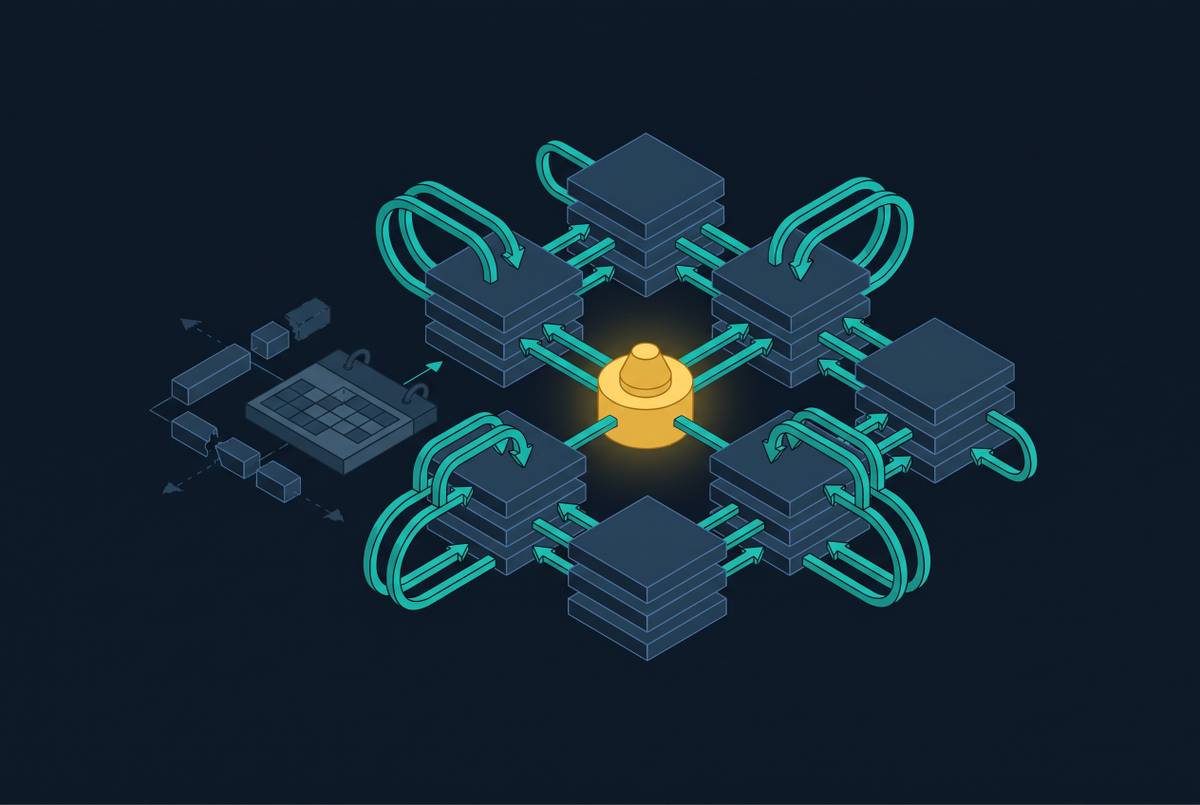
Post-campaign is where the real compounding happens, or doesn't. Every campaign leaves behind evidence: which audiences responded, which creative held up, what worked and what flopped. A platform that captures and feeds that evidence back into its predictive layer gets sharper with each cycle. A platform that doesn't just resets to zero. Same starting line, every single time, no matter how many campaigns have already run.
Why most platforms break the compounding loop at measurement
A lot of this falls apart, and it's rarely a technology problem. It's a measurement problem.
A persistent challenge across B2B marketing is that the metrics being tracked are not actually aligned with what the organization cares about. That's a big deal, because it means the metrics being tracked, the ones the whole predictive loop is supposed to learn from, aren't the metrics that matter to the business.
The consequence becomes visible fast when budgets tighten. Programs that can't show a clear link to pipeline are usually the first thing cut, regardless of how sophisticated the underlying AI is. And if the predictive loop is learning from the wrong signal, it doesn't matter how much data flows through it. Garbage in, garbage out, just automated and running at full speed.
Activity metrics and revenue-linked metrics measure different things. Lead volume, MQL counts, impressions, these are activity metrics, and they don't actually feed anything useful back into a predictive model. They measure motion, not outcome. Revenue-linked metrics, pipeline sourced, pipeline influenced, deal velocity, actual revenue, are the ones that give the predictive layer something real to learn from.
Programs that are surviving budget scrutiny going into 2026 mostly share one trait: they replaced activity metrics with revenue-linked ones. Not a fancier AI stack. Not a bigger dataset. Just a decision to measure what actually matters to the business, and let that be the thing the system optimizes toward.
What human judgment still owns inside a predictive agentic platform
The architecture showing up by 2026 isn't a single all-powerful agent. It's coordinated teams of specialized agents, each with a narrow job: one identifies who's on the buying committee, another researches company context, a third drafts personalized outreach, a fourth watches engagement and flags changes.
Agents are genuinely good at certain things: running continuously without getting tired, watching for thresholds, spotting patterns across huge volumes of data, adjusting bids, managing A/B tests, catching anomalies, and pulling together reports. It frees people up from a lot of tedious labor.
But there's a clear list of things agents handle poorly without a human keeping watch:
- Strategic calls where the business context is ambiguous or shifting fast, agents don't have the judgment to weigh competing priorities the way a person can
- Exception handling when data is corrupted, incomplete, or just weird in a way that needs domain knowledge to make sense of
- Brand voice, compliance, and ethical guardrails, the platforms that succeed pair strong agents with strong human governance around exactly these things
- Diagnosing what's actually holding growth back, whether that's a creative problem, a landing-page problem, a gap in attribution, or the wrong channel mix, rather than just tuning whatever lever the agent already has access to
An agent will optimize whatever it's been given control over, but it won't step back and ask whether the whole strategy needs to change. An agent will optimize whatever it's been given control over. It won't step back and ask whether the whole strategy needs to change. That's still a human job.
Growth leaders who've built AI directly into their core workflows tend to point to two specific benefits: better seller efficiency (59% of respondents) and better customer experiences (53% of respondents). Notice what's missing from that list: replacing strategic judgment. Even the leaders furthest along with this technology aren't describing it as a substitute for thinking. They're describing it as leverage for the thinking they're already doing.
How to evaluate whether a platform's predictive analytics genuinely compounds
Every major customer engagement platform seems to have shipped some kind of AI marketing agent in the first half of 2026. Braze launched BrazeAI Operator and Agent Console. Iterable released Nova Agent. Klaviyo introduced Composer. Salesforce scaled Agentforce to a growing but still limited share of its customer base. Adobe expanded AI across Campaign and Journey Optimizer. With that much activity happening at once, telling apart a platform that genuinely compounds intelligence from one that's just repackaged automation with a chat interface takes some specific questions.
Six things to check before committing to any platform:
Agent scope. Does the agent cover the whole campaign lifecycle, strategy, segmentation, build, creative, reporting, from one place? Or are the AI features scattered across separate tools bolted together? Data foundation. Does the platform have its own data layer or customer data platform built in? Or does it depend entirely on the customer's existing data pipeline? Every hole in that pipeline becomes a hole in the agent's predictions. Control and governance. What has to happen before the agent takes action? Is there configurable approval logic, or does it just act on its own by default, no matter the situation? Cross-channel coverage. Can the agent coordinate a single journey across multiple channels? Or does it just optimize inside one channel while ignoring what's happening everywhere else? Evidence accumulation. Does the platform hold onto what it learned from past campaigns and actually use that to sharpen future predictions? Or does every new campaign start from the exact same blank slate? Architectural depth. What happens when a task gets genuinely complicated, multiple segments, multiple channels, branching logic? Agents that lose the thread on long, complex tasks tend to fall back on generic, forgettable output.
One useful test cuts through most of the marketing noise: ask a vendor what the platform "knew" going into campaign three that it didn't know going into campaign one. If there's a specific, concrete answer, that shows the platform is carrying forward something learned from earlier campaigns into later ones. If the answer is vague, some version of "it just gets smarter over time," that's a sign it isn't.
Brand-new launches should be treated with skepticism before treating them as proven. Adobe's CX Enterprise Coworker, for example, only reached general availability in June 2026, and no independent evidence of outcomes existed at the time of writing. That doesn't mean it won't work. It means the claims haven't been tested in the wild yet, and a platform that's only weeks old hasn't had the chance to prove it can compound anything.