The Agentic Platform Characteristic That Makes Every B2B Campaign Smarter Than the Last
Persistent memory across campaigns lets B2B teams learn from past outcomes, not repeat them.
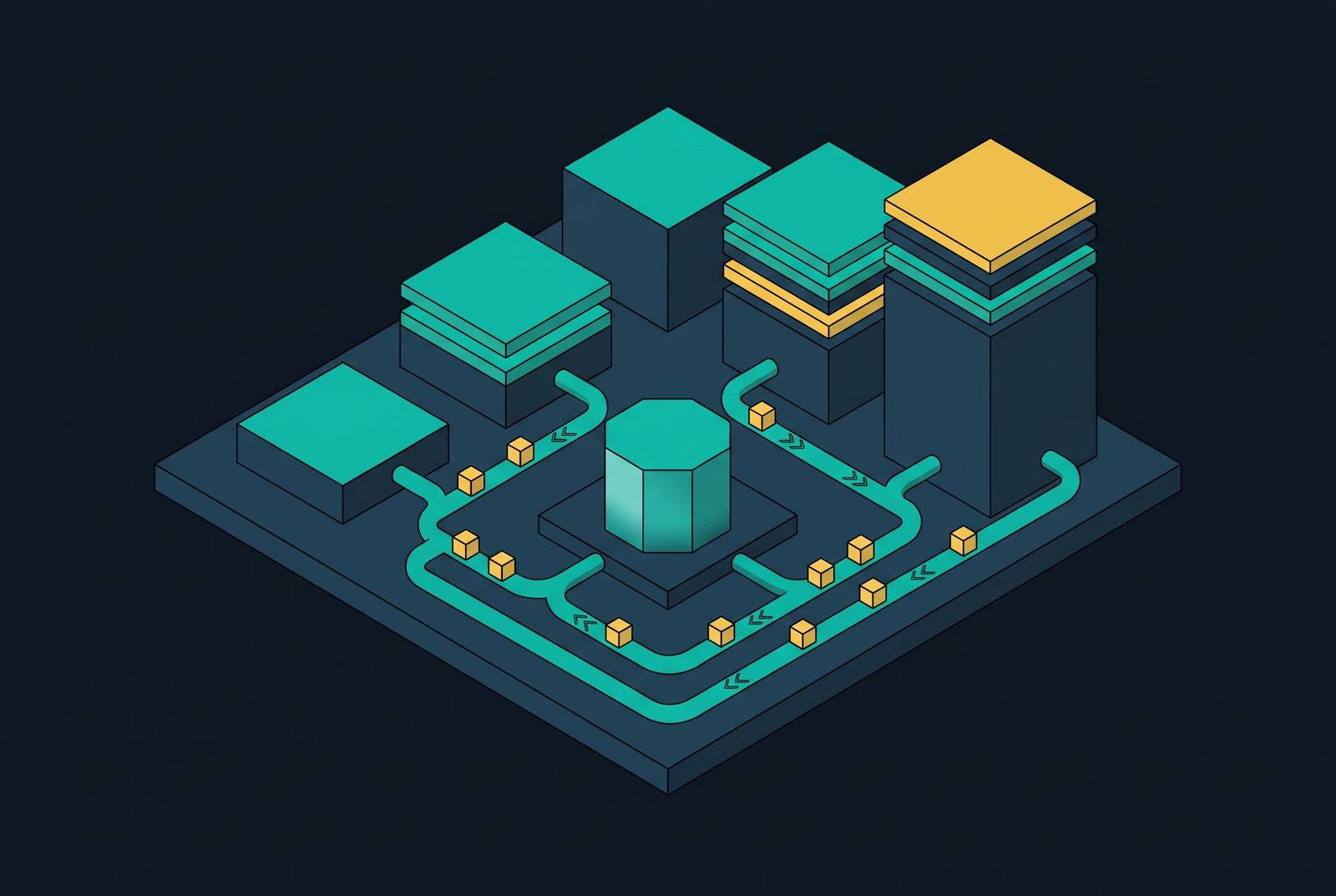
Compounding campaign intelligence for B2B growth marketing needs a persistent feedback loop that uses past outcomes to help decide what to do next. The defining agentic platform characteristic is not faster execution, but memory that connects audience, creative, and attribution evidence to future plans. Without that connection, campaigns can get busier without getting wiser.
Why most "AI-powered" campaigns stop learning the moment they finish running
The ads change, the reports come in, and the next campaign somehow asks the same questions as the last. Which accounts should the team target? Which message will produce a meeting? Activity is not the same as accumulated judgment.
Traditional automation makes this problem easy to miss because it executes reliably. A rule such as “if lead score exceeds X, send email Y” can run without ever updating based on whether email Y produced a meeting. Base generative AI has a similar limit. A marketer requests an output, the model supplies it, and a human integrates it into the campaign. Neither process, by itself, closes the path from outcome to next decision.
The weakness is therefore not a shortage of speed. It is the loss of useful context between runs. When outcomes do not change the next plan, a team running many campaigns does not gain those campaigns’ worth of intelligence. It gets variations on the same experiment, with a very efficient reset button.
What "agentic" actually means, and why most tools using the word do not qualify
A genuinely agentic system can perceive signals, plan toward a goal, execute across channels, and learn from the outcome. It then repeats that loop without requiring a human to re-brief it at every step. Each stage has a distinct job. Signals show what is happening, planning chooses what to do, execution tests that choice, and learning changes what happens next. Without the last stage, the machine keeps working, but it gets no better at choosing what to do.
That is a stricter test than the phrase “AI-powered” usually suggests. A tool that generates an ad has produced an output. A tool that launches that ad has added execution, but it still may not learn whether the leads it brought in became qualified opportunities. The label does not close those gaps. Most tools called agentic satisfy only one or two parts of the loop.
Continuous learning is the decisive distinction because autonomy alone does not establish that anything has been learned. Cross-channel execution can spread the same uninformed choice across more places. In 2026, autonomy and cross-channel execution are table stakes for this category, while retained outcome memory is not. The system must change its next decision based on what happened after its last one. A tool that resets its context after each run is an execution accelerator.
How does persistent memory make B2B campaign data compound over time?
Persistent memory brings past outcomes into planning and execution. A dashboard displays past data for a person to interpret, while a compounding system applies that evidence when choosing what to do next. The next decision must draw on the stored results.
Audience intelligence is the first layer of that context. Across campaigns, the system accumulates evidence about which account segments and personas respond to which message types. The next campaign therefore starts with more than a fresh targeting hypothesis. It can use earlier responses to choose which audiences and messages to put together.
Creative intelligence adds evidence of what won those audiences over. It connects ad variants, landing page treatments, and message framings to downstream pipeline. A popular ad is not automatically a productive ad. If a creative treatment gets attention without producing qualified pipeline, the system needs to use that evidence when it next chooses a treatment. Otherwise the system learns to applaud the wrong performance.
Attribution intelligence completes the connection by retaining which touchpoint sequences preceded closed deals. Budget decisions can then reflect what actually converted rather than only what platform reporting claimed converted. These layers work together. Audience evidence informs whom to reach, creative evidence informs what to show, and attribution evidence connects those choices to business outcomes. Each campaign adds to the evidence available for the next one.
A lead insight agent may feed a qualification agent, which then hands off to a meeting-booking agent. Persistent memory gives those handoffs context so each agent has something to build on. Without it, even a well-organized loop can repeat without accumulating anything.
How the feedback loop degrades when the funnel is fragmented across separate owners
The difficulty begins when the system cannot see the whole outcome. An agency owns the ad account, the web team owns the landing page, and RevOps owns the CRM. The conversion event belongs, in practice, to whoever configured Google Tag Manager two years ago. Everyone owns a piece of the path. Nobody is accountable for the journey from impression to revenue.
That split changes what the agent can learn. If the conversion event records a form fill, the system optimizes toward form fills, even when they do not become qualified pipeline. Better execution cannot repair a misleading objective. The agent may get better and better at producing the event it was given while still knowing little about the result the business wanted. This is a signal problem.
Landing pages create a similar break. An ad variant can bring in clicks while the page it leads to loses visitors before they convert. If the page’s owner does not share that outcome with the ad system, the creative preference lacks the evidence that should correct it. Audience intelligence then rests on incomplete responses, creative intelligence overvalues the click, and attribution cannot connect the full sequence. The blind spot spreads through all three layers.
Fragmentation is not a personnel problem, but an architectural one. No amount of coordination meetings repairs a loop that was never closed.
What a closed-loop, full-stack execution system looks like in practice on Google and LinkedIn
A working closed-loop system operates above the individual advertising platforms. It connects GA4 and CRM pipeline data to bidding logic, creative selection, and audience targeting across Google and LinkedIn. The separate tools use the same outcome signal to make those choices together. The system tracks which clicks became meetings and which meetings closed. A platform-recorded conversion is an input.
Google Smart Bidding and LinkedIn Accelerate use their own conversion signals for platform-native optimization. That is useful within their measurement boundaries. Neither should be mistaken for the complete cross-channel feedback loop described here, because optimization cannot account for downstream outcomes that those signals do not expose. The above-platform system integrates paid execution with pipeline evidence.
The two channels contribute different kinds of learning. Google captures demand that already exists, so its feedback loop reveals which in-market signals correlate with qualified pipeline. LinkedIn creates demand among a defined audience. Its loop reveals which account segments and creative treatments engage the actual buying committee.
Creative iteration belongs inside that coordinated process. The system tests variants continuously and connects their performance to pipeline outcomes, making A/B testing an ongoing behavior. Human review still has a job. Platform ranking systems in 2026 can down-rank generic, low-quality, mass-produced AI-generated creative, so the loop needs governance over what it publishes. The dividing line is originality and quality.
Agents handle the ongoing work, while a named expert governs decisions and holds the signal chain together. That ownership connects the landing page, conversion event, CRM outcome, and next campaign choice. It prevents automation from becoming an extremely diligent student of the wrong lesson.
Why the compounding loop is the structural advantage that campaign-by-campaign tools cannot replicate
The accumulated evidence base becomes an asset in its own right. Campaign results have value right away, while the audience, creative, and attribution intelligence the system keeps helps it make better decisions later. A campaign-by-campaign tool that discards context produces only the first kind of value. Running it more often does not create the missing memory. Adding an AI layer does not, by itself, change that structure.
An orchestration agent may have learned that particular enterprise accounts respond to personalized landing pages, executive-level email, and LinkedIn ad sequences. Its next plan can draw on evidence from similar accounts. A fresh engagement must rebuild that basis for judgment. It may reach the same conclusion, but it cannot begin with evidence it has never retained.
That creates an uneven contest over successive campaigns. A closed-loop system allocates budget from a growing base of outcomes, while a non-compounding system repeatedly spends to test familiar hypotheses. The former’s cost per qualified pipeline contribution tends to fall as its decisions improve. The latter has no equivalent learning advantage.
Does the platform retain and apply what it learned in campaign N when planning campaign N+1? A yes needs to mean more than historical results stored in a dashboard. The evidence must serve as active planning context. This advantage is not visible in the first campaign. Organizations evaluating paid media month by month can therefore miss it entirely.
What a B2B marketing leader should audit before trusting that their system is actually compounding
The practical diagnostic starts with signal integrity. What conversion event does the paid media system optimize toward, and does it correspond to a qualified opportunity in the CRM or only a form fill? Trace the event to its downstream result. If explaining that path requires several people to assemble separate answers, the signal is likely incomplete. A revealing check is whether the system can connect creative from six months ago to accounts that closed.
Who is accountable for impression to revenue as one continuous system? “Multiple teams with different managers” describes participation under divided ownership. To test the consequence, ask what happens when a landing page has a high drop-off rate. Does the paid media system know, or must someone spot it in another analytics tool and bring it to the ad team?
What does the system know before the new campaign begins that it did not know before the first campaign? Looking at last time’s report is not enough. The specific check is whether it starts with a standing hypothesis about audience segments and creative treatments derived from all prior campaigns. If it must test its way back to a conclusion already reached, its history serves only as a retrieved record.
A conversion signal may stop at the platform boundary, a landing page may withhold downstream evidence, or reporting may depend on a human to translate results into decisions. The delegation model is designed to close those gaps. Agents take responsibility for continuous execution, while a named expert governs consequential choices and maintains the connection from outcomes to action. Delegation here is not merely a convenience for a busy team.
The compounding loop is not ultimately a technology problem, but an ownership and architecture problem. The organizations closing it fastest make a single system, with a single accountable owner, responsible for the whole path from impression to pipeline.